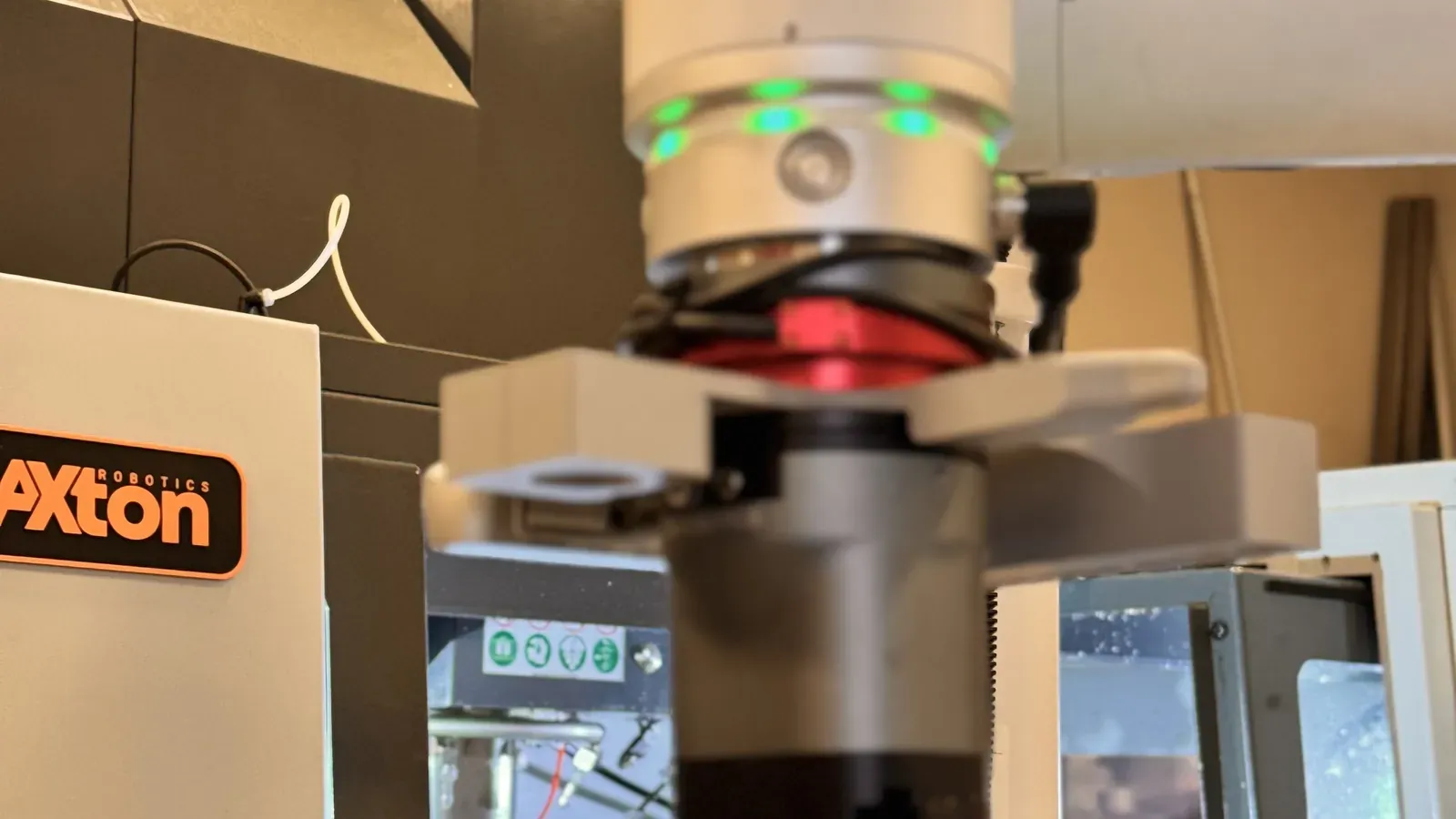
Here's something most people don't know about factory robots.
Many of them are blind.
They don't look for the part. They go to where the part should be. If it's there, great. If it's a few millimeters off, or missing, or upside down, they find out the hard way.
We wanted a robot that looks first.
A blind robot depends on a perfect world.
Every part sits in a custom fixture. Every tray is machined to hold one exact shape. Every change of job means new fixtures, new teaching, new hours.
That's fine if you run the same part 50,000 times.
It's painful if you're a job shop running 30 different parts this month.
And that's exactly who we're building for.
The Axton Robotics station has a camera that watches the parts and the work area.
But a camera alone just takes pictures. The AI is what turns those pictures into decisions.
The station is designed to
Instead of hoping the part is there, the robot knows.
Seeing is step one. Deciding is what matters.
If the part is where it should be, the robot picks it and moves on.
If it's shifted, the robot adjusts its grip.
If something looks wrong, a missing part, the wrong part, an unexpected object, the station is designed to stop and tell someone. Not guess.
A robot that knows when to stop is worth more than one that never does.
Vision is what makes plug and play realistic.
Less custom fixturing. Faster changeovers. Simple trays instead of precision nests for every part.
An operator can load the day's work in the morning without needing to place every part perfectly. The station handles the small differences.
That's the difference between automation for big factories and automation for real shops.
Machine shops are hard places for cameras.
Shiny aluminum reflects light. Coolant and chips get everywhere. Shop lighting changes through the day.
These are real challenges, and they're a big part of what we're testing. Good vision isn't just a smart model. It's lighting, camera placement, and a lot of time watching real parts on a real floor.
, the markers that tell the station exactly where it is.
AI vision is the other half. AprilTags tell the robot where it stands. Vision tells it what's in front of it.
Together, they let a robot work on its own with confidence.
and talk about the real reason all of this matters. The machine tender most shops can't hire.
Curious how vision would handle your parts? .
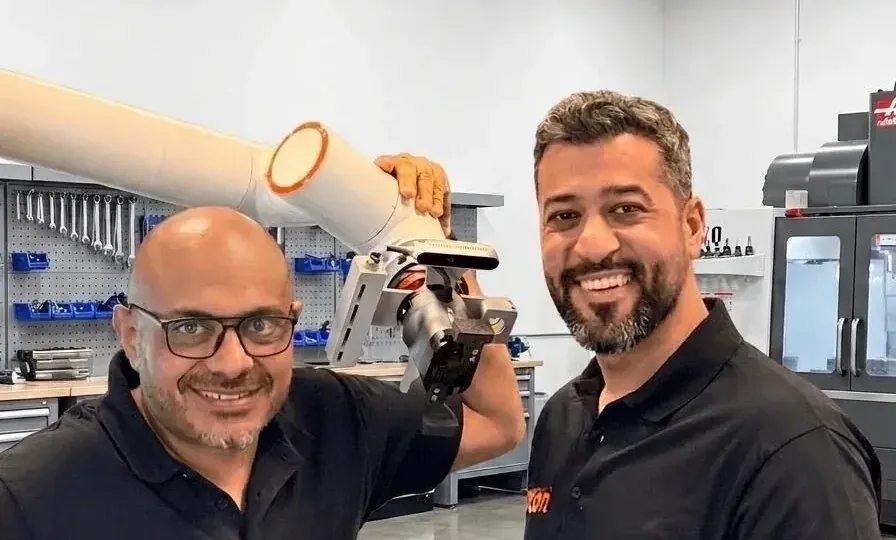
How a 12-year friendship between a Cairo software founder and a San Diego engineer became Axton Robotics, a plug-and-play CNC automation company.

Malak Mitch
Jan 15, 2026 — 7 min read
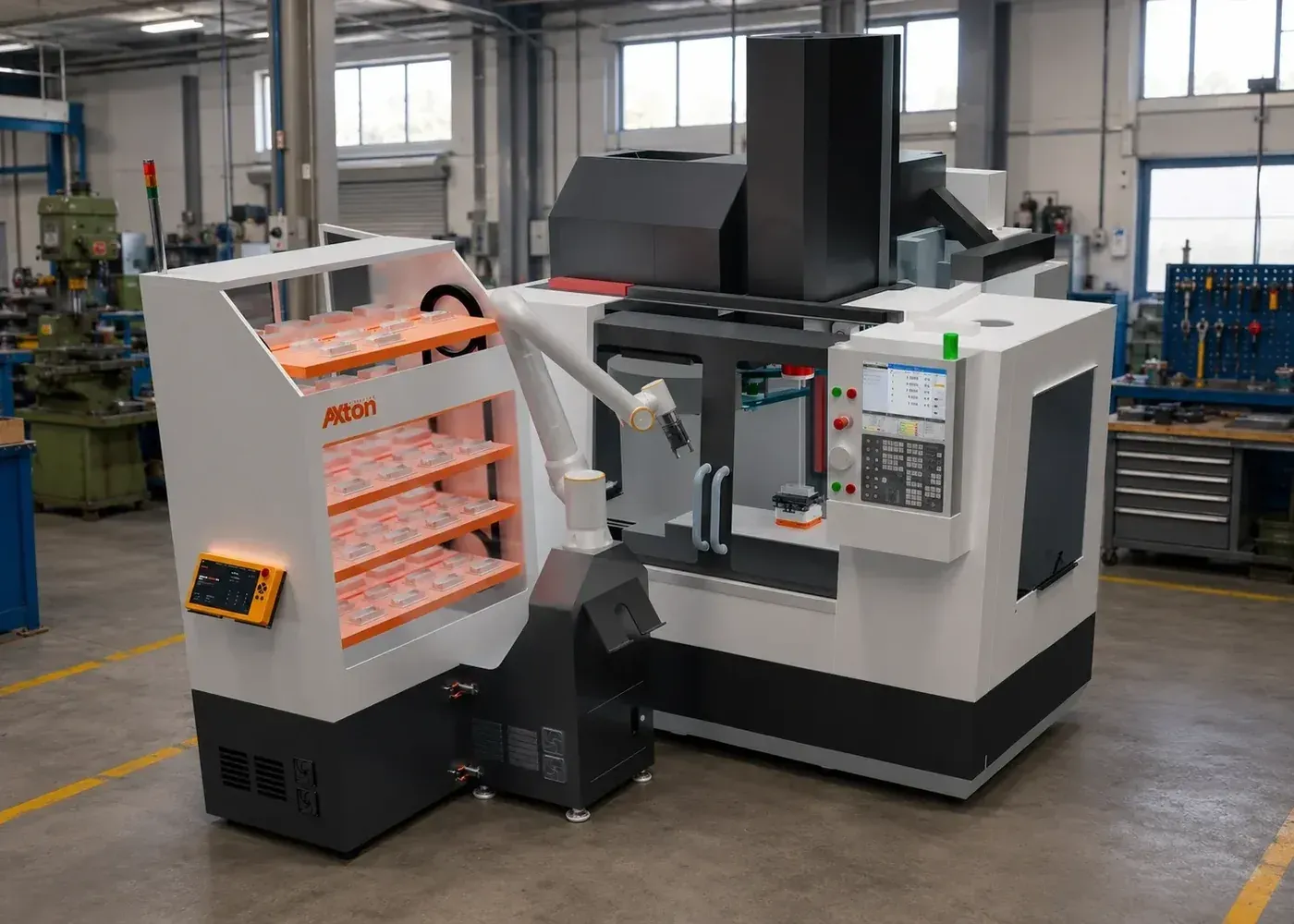
Inside the Axton Robotics carousel, a mobile, plug-and-play CNC machine tending station with AI vision, radar safety, and self-aligning AprilTags.

Michael Nessim
Apr 16, 2026 — 5 min read